
When Your Identity Was Built in Uniform: Navigating Who You Are After Service
Nobody warns you about the silence.
Not just the absence of engines, radios, or morning formations — the absence of instant recognition. In uniform, your role was clear, your people were close, and your mission was assigned. When that structure disappears, it happens faster than most veterans expect, and what’s left in its place can feel disorienting.
Many veterans assume the hardest part of transition will be finding a job or navigating the VA. Those challenges are real. But for a lot of people, the deeper struggle is this: waking up and realizing the thing that shaped your language, your standards, your friendships, and your sense of worth is no longer your daily life.
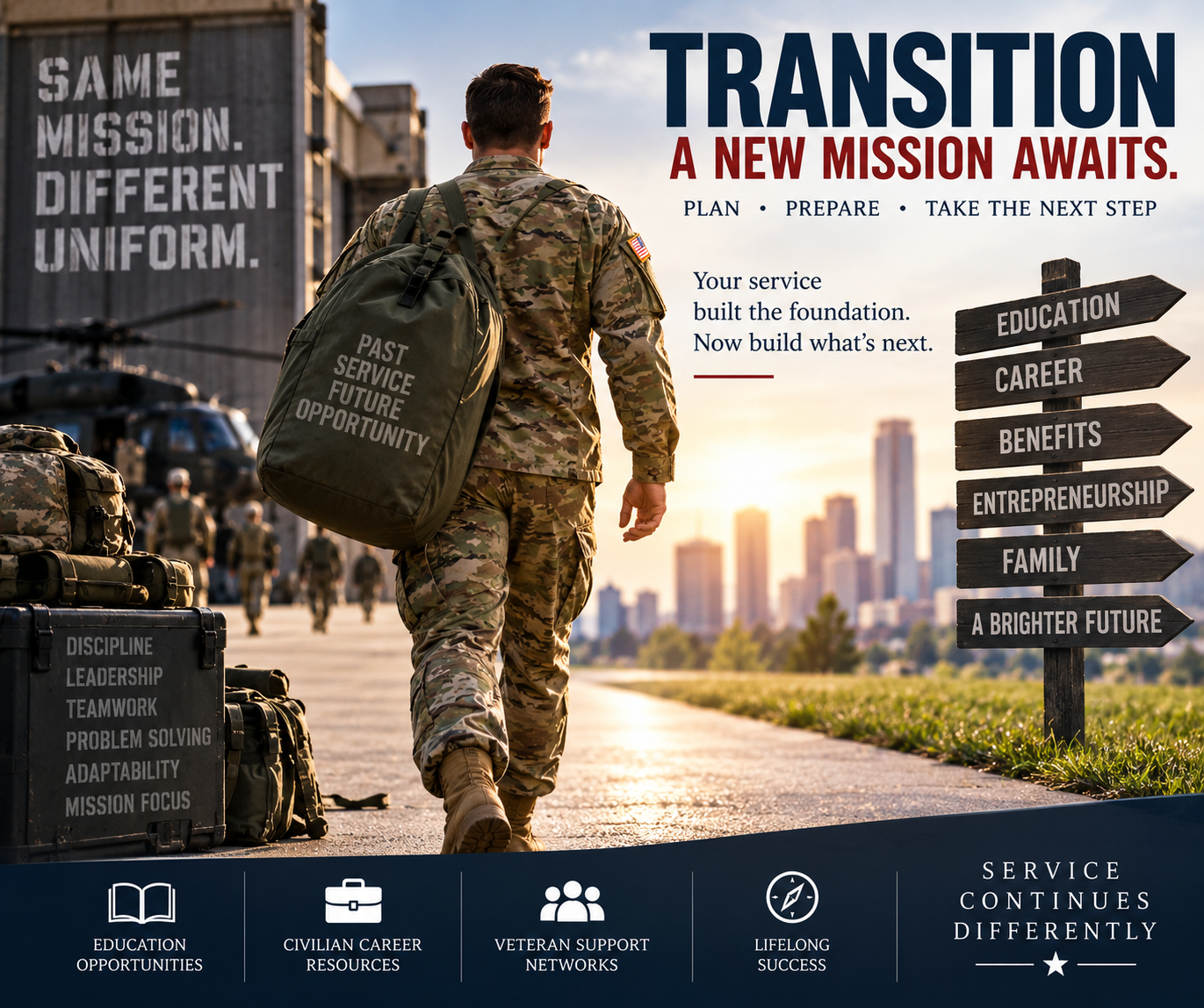
Why This Hits Harder Than People Expect
Military culture doesn’t just provide a paycheck. It gives you a rank structure, a code, and a reason to get up before dawn without needing to ask why. You know where to be, what right looks like, and who’s standing beside you.
Even on the hardest days, there’s clarity in that.
Civilian life rarely offers the same framework or the trust built when your life has depended on the person next to you. That mismatch creates real friction.
Some veterans feel restless and chase intensity because ordinary life suddenly feels flat. Others bury themselves in work, fitness, or helping everyone around them because slowing down forces an uncomfortable question:
Who am I now?
That question isn’t weakness. It’s what happens when an identity built around service and belonging is suddenly disconnected from the environment that shaped it.
It’s Rarely About Missing the Job Itself
Outside observers often assume veterans miss the excitement or intensity of the job. Sometimes that’s part of it, but usually the loss runs deeper:
Significance.
Being part of something that mattered. Shared hardship that forged real trust. Competence that was recognized without needing to explain it.
That’s why transition can sometimes feel like grief — not because your best years are behind you, but because a version of yourself forged under pressure no longer has the same outlet.
You can still be that person. The context simply has to change.
That shift is where many veterans get stuck.
The Trap of Trying to Stay Exactly the Same
One of the fastest paths to prolonged disconnection is trying to recreate active-duty life in every detail.
Structure helps. Standards help. Camaraderie helps. But measuring every day of civilian life against the military will always leave civilian life on the losing end.
This doesn’t mean abandoning who you were or pretending your service didn’t matter. It means recognizing that identity isn’t a museum piece — it’s something that has to evolve, or it becomes a weight that holds you in place.
Hold on too loosely and you feel unmoored. Hold on too tightly and you can’t move forward.
The right balance is keeping the values while changing the form they take.
Discipline still matters. Service still matters. Loyalty and competence still matter. They may now show up as leading your family well, building a business, mentoring others, running a team, or stepping into a mission-driven field like law enforcement, fire service, or emergency medicine.
What Makes the Transition Harder
Some veterans land smoothly. Many don’t — and the difference is rarely about resilience alone.
Isolation
Isolation compounds everything.
If your entire social world was built around your unit and daily contact disappears overnight, it doesn’t take long for things to feel disconnected. Add disrupted sleep, no training routine, and no larger sense of mission, and drift becomes easy.
Unrealistic Expectations
Some veterans assume the civilian world will automatically recognize and reward military traits.
Sometimes it does. Sometimes it doesn’t.
A civilian workplace may not immediately understand directness, urgency, or why certain standards matter. That doesn’t mean the standards are wrong; it means they need translation.
Starting Over
There’s also the identity hit that comes with going from experienced and respected in your field to being the newest person in the room again.
That can genuinely sting, regardless of what your role was in service.
Humility helps, but it doesn’t make the adjustment painless.
Rebuilding Identity Without Losing Yourself
The goal isn’t to erase your military past — it’s to integrate it into the person you’re becoming.
Start With Routine
It sounds basic because it is.
The military taught you that chaos gets handled with systems. Unstructured civilian freedom without that discipline tends to become drift instead.
A consistent wake time, a training routine, an ordered living space, and discipline around finances and relationships can do more for identity stability than most people expect.
Find a Mission That Costs You Something
It doesn’t need to be dramatic — it needs to matter.
That might be raising your children with presence and consistency. It might be building a career where competence is actually valued. It might be mentoring other veterans still navigating the rough part of transition.
Purpose isn’t always loud.
Sometimes it looks like showing up consistently.
Rebuild Connection
You may never recreate the exact bond of your old unit, and chasing that specific feeling can become a dead end.
What you can do is build genuine relationships with people who still value accountability, humor, and mutual respect.
Veteran organizations, training groups, faith communities, professional networks, and strong local communities can fill real gaps when they’re built on honesty rather than nostalgia.
When Identity Becomes a Way to Avoid Moving Forward
There’s another side to this worth naming directly: some veterans use their military identity as a way to avoid building anything new.
Every conversation returns to the past. Every frustration is attributed to civilians “not understanding.”
That posture can feel protective because it keeps your service at the center of your story — but over time, it can become stagnation instead.
Pride in your service is worth holding onto.
Living permanently in the rearview mirror is not the same thing.
The honest question worth asking yourself is:
Are you honoring your past, or hiding in it?
One builds a future with roots. The other keeps you parked in a chapter that has already ended.
What Real Support Actually Looks Like
Not every veteran needs the same intervention.
Some need better sleep, consistent training, or less reliance on alcohol. Some need work with a real mission attached to it. Some need a counselor who understands military culture specifically. Some need help learning how to reconnect with a spouse and children who changed while they were focused on surviving the demands of service.
The key is specificity.
Vague encouragement doesn’t do much when your sense of self is genuinely slipping.
If something feels off, name it directly.
Is it isolation? Lack of structure? Loss of purpose? Career frustration? Relationship strain?
The moment the actual issue is identified, the path forward becomes far clearer.
Your Next Mission May Look Different
The uniform came off, but your identity was never meant to end with it.
Keep the code. Keep the standards. Keep the pride.
Then put those things to work in the life you have now — not the one you had before.
Your next mission may not come with orders, but that doesn’t make it any less real.
About This Article
This article draws on and expands material originally published by IronSight Syndicate, Nathan Harlan’s veteran-owned apparel and lifestyle company.
Need Help Building What Comes Next?
If you’re navigating the shift from military service to civilian life and want a structured way to work through it — not vague encouragement, but a real plan — schedule a free consultation.
This is exactly the kind of challenge veteran transition coaching is built to address.