
Best Jobs After the Infantry: Where Your Skills Win
The best jobs after infantry aren't always the ones with “security” or “tactical” in the title.
You spent years solving problems while tired, under pressure, and responsible for the people beside you. That experience has real value. The challenge is translating it without sounding like you're reading a service record to someone who's never heard of a ruck march.
Civilian employers may not understand what a squad leader or infantryman actually does day to day. What they do understand is accountability, risk management, logistics, training, equipment readiness, and getting results when the plan falls apart.
Those aren't soft skills. They're hard-earned skills that just need civilian names.
Start With the Mission, Not the Job Title
A good post-infantry career needs more than a paycheck. You need one you can live with, a schedule that doesn't wreck your family, and a path that grows with you.
Some veterans want to stay close to the military world through law enforcement, fire service, defense contracting, or government work. Others want to get away from it entirely — building things, running equipment, learning a trade, or leading crews in a completely different field.
Neither choice is more honorable.
The right lane depends on what you want the next decade to look like, your physical condition, your tolerance for shift work, and how much more high-stress tempo you actually want.
Familiar isn't automatically right.
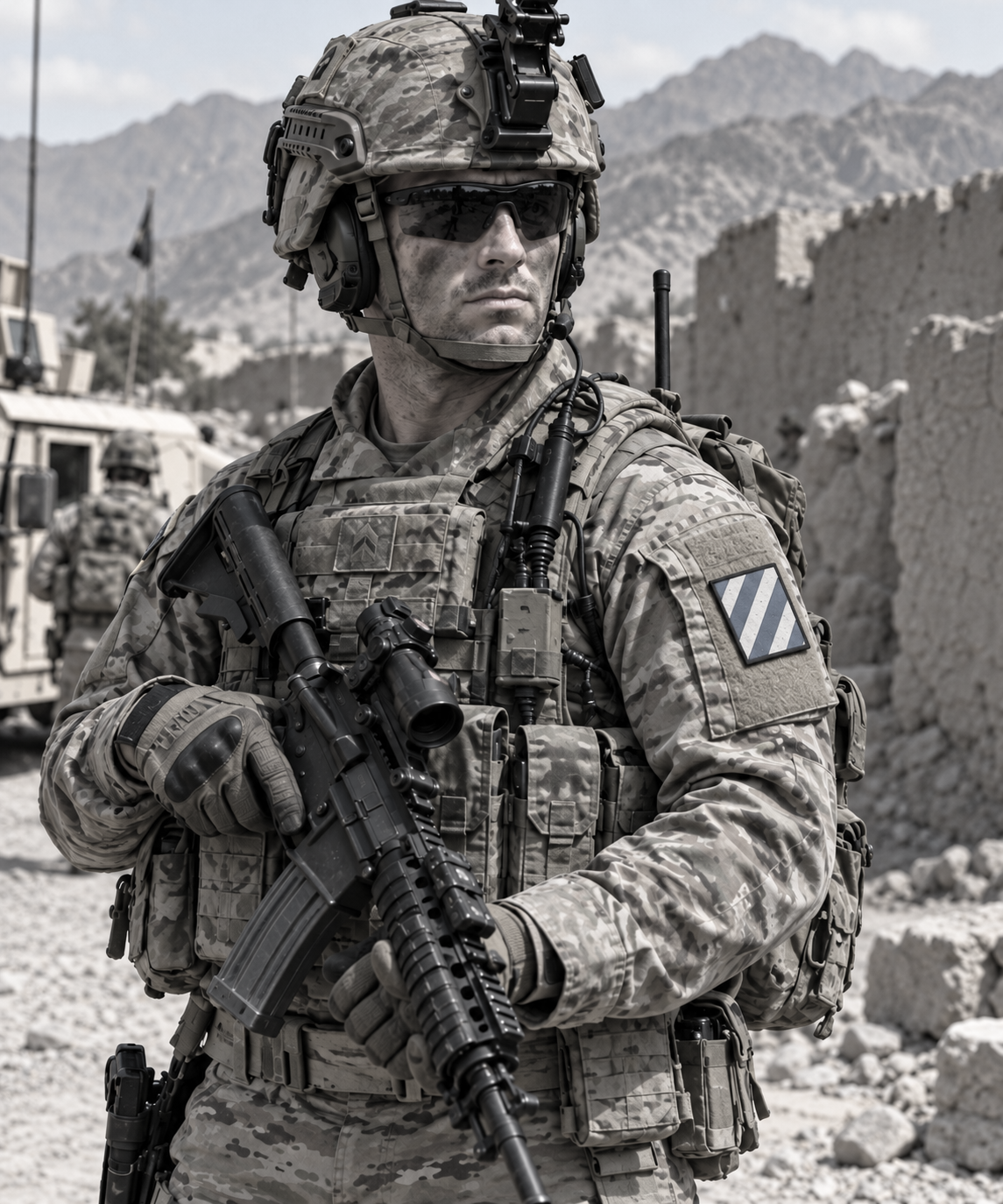
Harlan Advisory Group LLC. The Infantry Soldier
For Hands-On Operators
Skilled trades — electrical, HVAC, welding, heavy equipment, and industrial maintenance — reward many of the same things infantry does: reliability, safety discipline, attention to detail, and the ability to perform when conditions aren't ideal.
Apprenticeships can let you earn while you learn, with a real career ceiling once you're licensed, gain specialized experience, or move into supervision.
Construction and project supervision also draw directly on skills you already developed: personnel accountability, equipment checks, planning, safety, and moving a team toward a clear objective.
You may start in an entry-level position while learning the industry. That's not a step backward. The veteran who can learn the business and lead a crew without turning every morning into a formation can move up quickly.
Commercial driving and logistics can also fit veterans who value independence and can handle routine without losing attention to detail. These fields can provide a path into dispatch, operations, fleet management, and supply-chain leadership.
Public Safety — With Clear Eyes
Law enforcement, fire service, corrections, emergency management, and protective services attract veterans because the team culture and unpredictable work can feel familiar.
But police work isn't military work in a different uniform.
The mission is community-facing, communication and de-escalation matter enormously, and the legal environment is fundamentally different.
Research departments carefully. Talk to people actually doing the job — not just recruiters — before you commit.
Defense and Government Work
Defense contractors and government agencies often need people who understand military culture without having to have it explained to them.
That can include work supporting operations, logistics, training, maintenance, security, program management, supply chains, and coordination.
Some positions require a security clearance, technical certification, or degree. Others care more about relevant experience, leadership ability, and your willingness to learn.
Don't assume every defense job requires an engineering degree or a Top Secret clearance.
Read the actual job description, not just the logo on the business card.
Education as Leverage, Not the Easy Route
Using your education benefits can be a force multiplier.
A degree, professional license, apprenticeship, or technical certification can turn your military experience into a career with significantly greater long-term earning potential.
But don't choose a program simply because your benefits will pay for it.
Talk to people already doing the work before committing. Ask what their entry-level pay actually was, how long it took them to advance, what certifications employers value, and what experienced people in the field realistically earn.
Education should move you toward a specific objective, not just give you something to do after separation.
Translate the Experience — Don't Inflate It
Your resume needs plain language and measurable results, not military jargon.
Instead of writing:
Served as a dismounted infantry squad leader.
Explain what that responsibility actually meant.
You led, trained, and evaluated personnel; maintained accountability for equipment; planned and coordinated operations; managed risk; enforced safety standards; and made time-sensitive decisions under pressure.
Then add numbers wherever they're meaningful:
How many people did you lead? How much equipment were you responsible for? How many personnel did you train? What improved because you were there?
You don't need to inflate anything.
Anyone who carried real responsibility in an infantry platoon already has enough to talk about.
The Bottom Line
Leaving the infantry doesn't mean starting over.
It means translating what you've already learned into an industry that values it.
The strongest career after infantry isn't necessarily the one that looks most like the military. It's the one that gives you a combination of purpose, income, stability, growth, and a life you actually want to live.
Your military experience gives you a foundation.
What you build on top of it is the next mission.
More Veteran Transition Resources
A longer version of this article also appears on IronSight Syndicate, where I write more broadly about veteran life, military culture, and the transition to civilian life.
If you're trying to determine which civilian careers best match your experience, interests, and goals, use the Veteran Career Path Finder from Harlan Advisory Group.
If you'd rather talk through your options directly, you can also schedule a free 30-minute consultation.